

I have spent a lot of years being called a survivor. I am proud to be one. But I am so much more than what happened to me. For years, people looked at me and saw a victim before they saw experience. They saw trauma before they saw leadership.
We really need to talk about that.
I have worked internationally in the anti-trafficking field for 15 years. I have advised governments, trained professionals, worked on policy, chaired survivor councils, and written internationally published books. Yet, I still walk into rooms where the only valuable thing people think I can offer is my story.
Of course, my story matters. I was a child hidden in plain sight. I was in school. I was in the hospital. People saw me, but they did not recognise what they were looking at. When I was a victim at the age of 15, instead of being protected, I was arrested. That taught me things no university ever could. But my expertise did not end with what happened to me. There is something called epistemic injustice. Survivors speak about what we know, and it gets dismissed as anecdotal. Someone else researches the same thing, writes a paper, and suddenly it becomes “evidence.” The knowledge has not changed. The person listened to has.
Organizations, universities, and conference organizers regularly ask me to give my time and expertise for free. We talk about protecting survivors from exploitation, but create systems that expect survivors to work without remuneration. For some survivors, financial instability can push us straight back into the red zone, where vulnerability increases, and the risk of exploitation or re-trafficking becomes very real. This is exploitation at a professional level, and it needs to stop. If you have a budget for the project, include survivor expertise as a budget line. If you are inviting speakers, pay the honorarium.
Survivor leadership cannot be a tick-box exercise. Do not design a program, policy, or research project, only to bring survivors in towards the end to approve what you have already decided. Instead, embed survivors at the heart of the work from the very beginning when the questions are being asked, decisions made, programs designed, and throughout the implementation stage. Co-design means co-design. Not consultation after the fact. We should have real influence over what gets built, how it gets delivered, and how success is measured. That is survivor leadership. Ask us about strategy. Leadership. Policy. Research. What is failing? What needs to change? Ask us about solutions. I am not a story on legs to raise money for an organisation. Yes, I am a survivor. I am also a leader, author, adviser and expert. So let us go further than giving survivors a seat at the table. Let us help design the tables we are being asked to sit at.
We already have a voice. The question is whether you are prepared to value it, pay for it, and share power with it.
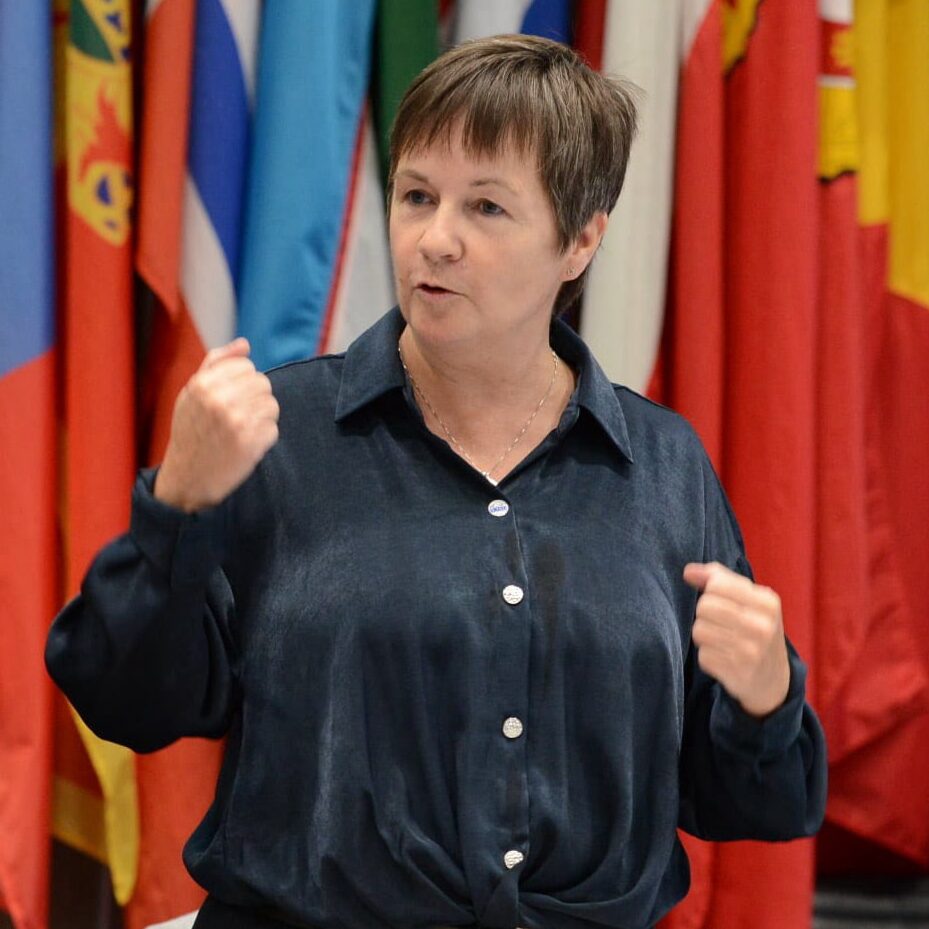
Jane Lasonder is a survivor of child sexual exploitation and trafficking who has dedicated her life to international advocacy, training, and speaker engagements.
Read Full Bio